
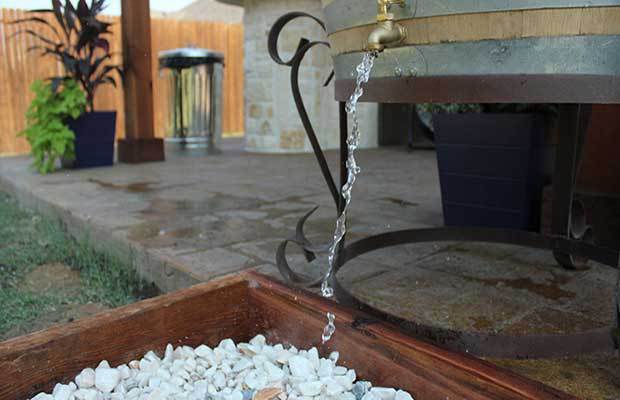

Land and water temperatures cause drought. As overall temperatures increase more water evaporates and severe weather conditions increase. … Soil moisture levels also contribute to drought. When soil moisture is depleted there is less evaporation of water to create clouds.
As a result, the climatological community has defined four types of drought:
- Meteorological drought
- Hydrological drought
- Agricultural drought
- Socioeconomic drought.
Meteorological drought happens when dry weather patterns dominate an area.
Related – Survival: How To Find Water
So, what is drought?
Drought is a continuous period of dry weather, when an area gets less than its normal amount of rain, over months or even years. Crops and other plants need water to grow, and animals need it to live. … A drought is a natural event, caused by other weather events like El Niño and high-pressure systems.

During our boiling, broiling, blistering summer of 2012, water was a topic of conversation wherever we went. Creeks and ponds dried up (some never recovered) and the water table dropped, forcing a few neighbors to have their well pumps lowered or to even have deeper wells drilled. Many folks shared memories of rain barrels, cisterns, hand pumps and drawing water with a well bucket as a child, usually on grandpa and grandma’s farm. Some said they’d never want to rely again on those old-time methods of getting water. But, at least they knew how it was done.
Related – How to Purify Water with Charcoal
It seems we have lost much practical knowledge in the last 50 or so years because we thought we’d never need it again. Now we are scrambling to relearn those simple know-hows.
A tattered, 4-inch thick, 1909 book I happily secured for $8 in a thrift store reveals, among umpteen-thousand other every-day skills, how to make homemade water filters. The instructions in “Household Discoveries and Mrs. Curtis’s Cookbook” are quite basic as everyone had a rain barrel back then and presumably knew how to filter rainwater. Now, 104 years later, I am thankful the authors had the foresight to preserve their knowledge for us, and pointed out that rainwater collected in barrels from a roof is a necessity in some locations, but also is best for laundry and “often more wholesome for drinking purposes than hard water.”
The “wholesome” observation applies to plants, too. I noticed during our 6-week dry spell (not a drop of rain) that I was only able to keep my vegetables alive with the garden hose – until our well, too, began sucking air. The pitiful potato, tomato and bean plants actually seemed petrified, like faded plastic decorations. Then, after a 2-hour rain shower, the plants miraculously leapt to life – vibrant, green and THRIVING. I did, too.

100-year-old instructions
For gardening, rainwater is, naturally, best unfiltered. But, for household use, the vintage book says the following instructions yield a cheap and easy way to make a filter just as good as a patent filter costing 10 times as much:
- Take a new vinegar barrel or an oak tub that has never been used, either a full cask or half size.
- Stand it on end raised on brick or stone from the ground.
- Insert a faucet near the bottom.
- Make a tight false bottom 3 or 4 inches from the bottom of the cask.
- Perforate this with small gimlet holes, and cover it with a piece of clean white canvas.
- Place on this false bottom a layer of clean pebbles 3 or 4 inches in thickness;
- Next, a layer of clean washed sand and gravel
- Then coarsely granulated charcoal about the size of small peas. Charcoal made from hard maple is the best.
- After putting in a half bushel or so, pound it down firmly.
- Then put in more until the tub is filled within 1 foot of the top.
- Add a 3-inch layer of pebbles; and throw over the top a piece of canvas as a strainer.
- This canvas strainer can be removed and washed occasionally and the cask can be dumped out, pebbles cleansed and charcoal renewed every spring and fall, or once a year may be sufficient.
Related – How to Build an Automatic Watering Tube for Your Chickens
“This filter may be set in the cellar and used only for drinking water. Or it may be used in time of drought for filtering stagnant water, which would otherwise be unpalatable, for the use of stock. This also makes a good cider filter for the purpose of making vinegar. The cider should first be passed through cheese cloth to remove all coarser particles.
“Or a small cheap filter may be made from a flower pot. A fine sponge may be inserted in the hole and the pot filled about as directed for the above filter. It may be placed in the top of a jar, which will receive the filtered water.”
On a different note, here’s some other self-sufficiency and preparedness solutions recommended for you:
The Lost Ways (The vital self-sufficiency lessons our great grand-fathers left us)
Survival MD (Knowledge to survive any medical crisis situation)
Backyard Liberty (Liberal’s hidden agenda: more than just your guns…)
Alive After the Fall (Build yourself the only unlimited water source you’ll ever need)
The Lost ways II (4 Important Forgotten Skills used by our Ancestors that can help you in any crisis)
The Patriot Privacy Kit (Secure your privacy in just 10 simple steps)













Han / May 6, 2018
filtered rain okay BUT when watter is radiated by nuclear activities?? DO YOU HAVE AN ANSWER to that??
/
kelly siefkas / July 29, 2018
Stored water
/
Foster Hoover / September 5, 2018
Nuclear contamination may be filtered out with the above filter.
Fallout is dirt containing radio nuclides, the filter will trap these.
After its use I would not use it again.
/
Theresa / September 22, 2018
with Radioactivity it depends if it is Radon gas or Gamma Rays. If it is Radon Gas create a active water run to aerate the water also have it in direct sunlight to let the UV light decompose it. Gamma Radiation would be the use of Iodine in your food to contract the Radiated water.
/
JayT / September 7, 2018
Where can you buy granulated charcoal at reasonable price. All I see online is expensive powdered charcoal.
/
HCW / March 3, 2019
Granulated charcoal can be purchased where you get fish tank supplies.
/